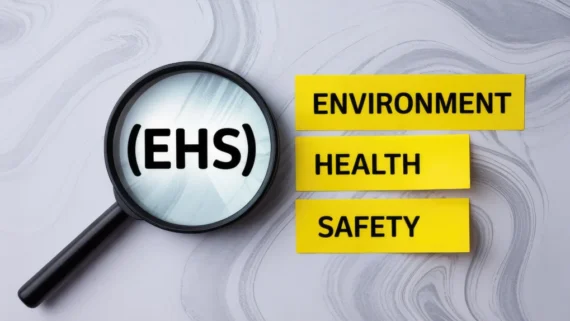

The 10 Best EHS Software Platforms in Canada (2026 Guide)


In 2026, Environmental, Health and Safety (EHS) software in Canada is no longer just a “nice-to-have” for large organizations. It has become a core operating system for safety, compliance, onboarding, training, and workforce accountability. Canadian industries like energy, construction, mining, transportation, manufacturing, and forestry continue to face higher expectations around documentation, audit readiness, competency tracking, and incident prevention. At the same time, staffing constraints and faster project timelines are pushing safety teams to do more with fewer resources.
This is exactly where EHS software proves its value.
Instead of chasing paper forms, spreadsheets, siloed training records, and inconsistent processes, today’s best EHS platforms help companies:
- Standardize inspections and safety documentation
- Streamline hazard reporting and corrective actions
- Track incidents and close the loop on investigations
- Build and enforce training requirements through competency matrices
- Demonstrate compliance during audits and client reviews
- Support mobile crews working across remote sites
- Reduce administrative effort while improving visibility
But not all EHS software is equal.
Some tools are designed primarily for inspections and checklists. Others focus on occupational health or regulatory reporting. Some are enterprise-grade platforms built for organizations with hundreds or thousands of employees. Others are nimble and field-first, built for speed and simplicity. In Canada specifically, a strong EHS system must also work well with how Canadian organizations operate: multi-site, high-risk environments, contractor-heavy workforces, bilingual requirements in some regions, and an increasing need for evidence-driven safety programs.
What Makes EHS Software “The Best” in 2026?

Before we get into the list, it helps to define what “best” actually means. Most companies are not searching for the most feature-heavy tool. They are searching for the best tool for their real safety needs, including:
1) Practical usability for real teams
The best software is actually used consistently. If it’s complicated, slow, or too rigid, adoption fails and safety returns to spreadsheets.
2) Training and competency tracking
In 2026, companies are looking beyond incident tracking. They want training assignments, training matrices, competency assessment, and proof that workers are qualified before they step onsite.
3) Compliance readiness and reporting
When audits happen, the best platforms provide fast, reliable documentation and clear reports. The goal is not to create data. The goal is to create defensible, audit-ready proof.
4) Mobile-first workflows
Canadian workforces are highly field-based. Inspections, observations, forms, hazard reports, and incident reporting must work on mobile devices even in challenging environments.
5) Scalability across multiple sites and contractors
Many organizations in Canada operate across remote project sites and rely on a mix of employees, contractors, and seasonal workforces. Strong user management and scalable compliance tracking matter.
The 10 Best EHS Software Platforms in Canada (2026)
1) BIS Safety Software
https://trainanddevelop.ca/ehs-software/
BIS Safety Software offers a comprehensive suite of solutions designed to streamline safety management and compliance across industries. Its enterprise-level Learning Management System (LMS) supports online training, exams, and integrated training matrices.
What BIS does especially well:
- Combines training, competency tracking, and safety compliance in one centralized system
- Supports training matrices and qualification tracking that help prevent unqualified workers from going onsite
- Designed for contractor-heavy, multi-site, and high-risk environments
- Strong documentation and reporting for audits, incidents, and client reviews
- Helpful for organizations that need workforce qualification proof as part of daily operations
2) SafetyCulture (iAuditor)
SafetyCulture is a mobile-first safety platform best known for inspections, corrective actions, issue reporting, and frontline workflows. It is widely used by organizations that prioritize field engagement, speed, and consistency across job sites.
What SafetyCulture does especially well:
- Fast deployment of inspection checklists and safety routines
- Strong mobile inspection experience and frontline usability
- Excellent corrective action tracking and site-level reporting
- Great for companies that want repeatable jobsite workflows and field accountability
- Supports large distributed workforces with strong adoption potential

3) eCompliance (Alcumus)
https://www.alcumus.com/en-ca/ecompliance/
eCompliance is a widely recognized EHS platform used by organizations looking for structured safety program management, incident reporting, audits, and compliance tracking. It’s often selected by teams that want broad EHS coverage inside a centralized system.
What eCompliance does especially well:
- Strong suite for incident reporting, audits, and safety program governance
- Consistent compliance documentation across sites
- Good reporting structure for EHS leadership and management teams
- Often used by organizations seeking a well-established system with a strong footprint in Canada
- Useful for formalized safety programs requiring standardization

4) SiteDocs
SiteDocs is Canadian safety software popular in construction and field operations. It’s known for digital forms, inspections, audits, and safety documentation that replaces paperwork-heavy workflows on job sites.
What SiteDocs does especially well:
- Strong fit for Canadian construction and jobsite-driven environments
- Excellent digital forms and safety paperwork tools
- Supports field adoption with simple, practical workflows
- Useful for contractor-heavy teams needing consistent documentation
- Well-suited for organizations modernizing safety processes quickly
5) Enablon
https://www.wolterskluwer.com/en/solutions/enablon
Enablon is an enterprise-grade EHS platform that sits inside a broader integrated risk management offering, supporting EHSQ, operational risk, and ESG programs. It’s a strong fit for organizations that need structured governance, audit-ready compliance, and consistent processes across multiple sites and business units.
What Enablon does especially well:
- Strong enterprise EHS foundation that connects safety, environmental management, and broader risk programs
- Supports audits and inspections with mobile-ready tooling designed for auditors (including Enablon Go)
- Clear focus on controlling risks that lead to serious incidents, with enterprise-wide visibility for leadership
- Built for regulated environments that need defensible documentation for compliance programs, incidents, and findings
- Scales well for larger, complex organizations that want standardized governance rather than lightweight checklist-only tools

6) VelocityEHS
VelocityEHS is an enterprise-level EHS platform with deep capabilities in incident management, chemical management, ergonomics, and compliance reporting. It is often used by mid-market and large organizations that need specialized EHS modules.
What VelocityEHS does especially well:
- Strong industrial hygiene and chemical management capabilities
- Useful for organizations with complex compliance obligations
- Broad enterprise functionality and structured reporting
- Supports specialized EHS teams with advanced requirements
- Good fit for organizations needing deep tools beyond inspections and incident logs
7) Intelex
Intelex is a comprehensive EHSQ platform that supports environment, health, safety, and quality workflows. It’s known for configurable modules and strong enterprise reporting and risk management capabilities.
What Intelex does especially well:
- Highly configurable workflows for organizations with unique processes
- Strong modules for audits, incidents, risk, and compliance
- Good option for organizations integrating safety with quality and environmental programs
- Built for mature programs seeking structured long-term EHS infrastructure
- Useful for teams that want customization and governance tools

8) Cority
Cority is an enterprise EHS and occupational health platform with deep capabilities in industrial hygiene, occupational health, compliance, and safety management. It is often used by organizations where health surveillance and exposure tracking are central requirements.
What Cority does especially well:
- Excellent occupational health and industrial hygiene tools
- Strong tracking for exposure, health surveillance, and compliance reporting
- Useful for sectors like energy, mining, and large manufacturing
- Supports teams that need health and safety integrated into one system
- Best suited to complex environments with mature compliance programs

9) ETQ Reliance
ETQ Reliance is a quality and compliance platform often used in regulated industries. It is especially relevant for organizations where quality management systems (QMS) and EHS compliance must work together.
What ETQ Reliance does especially well:
- Strong compliance documentation and regulated-industry workflow structure
- Excellent audit readiness and traceability tools
- Well-suited to manufacturing and industries requiring governance and documentation control
- Useful for organizations merging EHS and quality management systems
- Strong enterprise reporting and structured process management

10) OpenSesame
OpenSesame is a corporate training platform and course marketplace. While not a full EHS management platform, it is relevant to EHS programs because training delivery and compliance education are increasingly central to safety performance and proof-of-competency expectations.
What OpenSesame does especially well:
- Large library of corporate compliance and workforce development training
- Useful for organizations needing scalable training content quickly
- Helps close training gaps across diverse job roles
- Strong option for companies building a training ecosystem
- Often used alongside systems that manage broader EHS workflows
How to Choose the Right EHS Software in Canada (2026 Buyer Guidance)

Choosing EHS software is not about picking the “highest rated” system. It is about choosing the system that matches your operational reality. Here are a few practical scenarios that can help you decide:
- If your biggest pain is training compliance and competency proofChoose a platform that supports training assignments, qualification tracking, and strong recordkeeping.
- If your biggest pain is jobsite execution, inspections, and field documentationChoose a mobile-first platform designed for fast inspections, issue reporting, and jobsite workflows.
- If your biggest pain is enterprise compliance complexity (health, industrial hygiene, chemical management)Choose a system with advanced modules and deep reporting capabilities.
- If your organization is contractor-heavyPrioritize user management, credential tracking, training validation, and audit-ready documentation.
Final Thoughts: EHS Success Is More Than Software
The best EHS software in Canada in 2026 is not just a product. It is a force multiplier. It is how safety teams standardize expectations, protect workers, reduce risk, and prove compliance in a world that requires evidence, speed, and accountability.
That said, the best EHS software only works when it is paired with:
- Consistent leadership support
- Clear safety standards and expectations
- Real adoption and regular use
- Strong processes behind the technology
Software cannot replace culture. But it can make a strong culture easier to maintain and prove.