
Cargo Securement: Why Precision Prevents Incidents

Whether you’re hauling coils, bundled lumber, or heavy equipment, every shipment brings its own dynamics. One overlooked strap, angle, or anchor point can trigger cargo movement, product loss, or a collision that puts lives and livelihoods at risk.
The high cost of getting it wrong
- Shifts or lost loads can cause crashes, injuries, and highway closures that ripple through operations and brand reputation.
- Expect fines, claims, premium hikes, missed delivery windows, and strained customer relationships.
- Compliance records matter, carrier safety scores take a hit, and citations can follow drivers to future roles.
Common pitfalls to avoid
- Worn, cut, or UV‑damaged tiedowns that no longer meet rated capacity.
- Too few tiedowns for cargo length, weight, or geometry.
- Insufficient tension or re-tensioning, allowing slack after the first miles.
- Unsecured tarps, dunnage, or tools that turn into roadway debris.
Securement is a system, not a single device
- Containment: Vehicle structure, side stakes, headboards, and bulkheads that block movement.
- Immobilization: Blocking, bracing, chocking, and cribbing to stop rolling and tipping.
- Tiedowns: Rated chains or webbing applied at proper angles, with aggregate working load limit that meets or exceeds requirements.
Distribute weight to maintain braking, steering, and overall vehicle stability.
Inspections aren’t optional
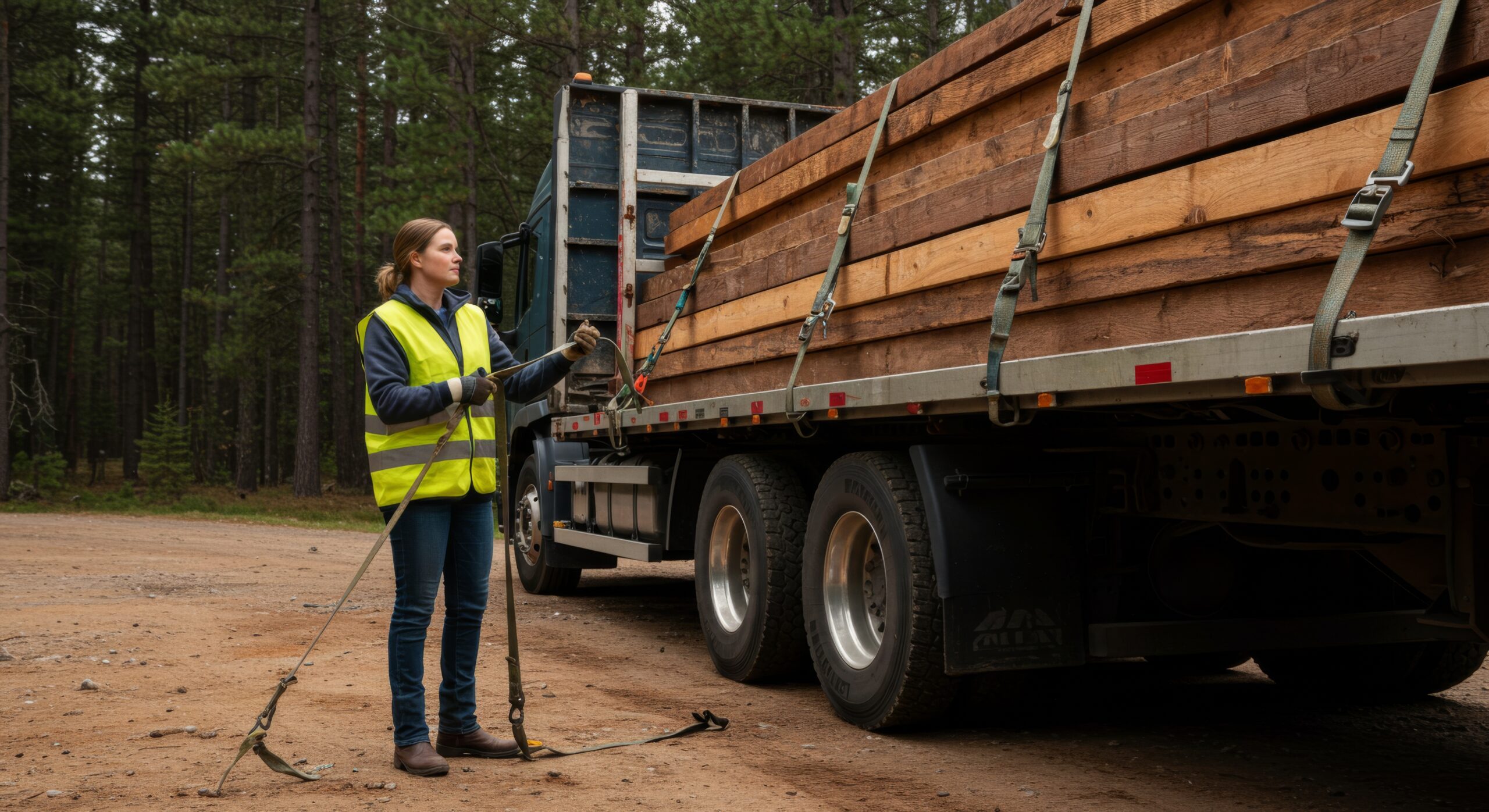
- Pre‑trip: Verify anchors, edges, WLL calculations, angles, and tension; protect sharp edges.
- En‑route: Recheck after initial travel and at planned intervals; retension as loads settle or weather changes.
- At stops: Confirm nothing shifted during loading adjustments or route changes.
Training and culture make it stick
- Standardize how gear is selected, counted, and documented.
- Teach angle effects, edge protection, commodity-specific methods, and WLL math.
- Reinforce mid‑trip verification and escalation when conditions warrant.
Conclusion
Cargo securement is both law and duty of care. Treat every load as a unique hazard until proven stable through layered controls and documented checks. When securement is done right, drivers, freight, and the public reach their destinations safely.

Ready to raise your securement standard?
Enroll in BIS Safety Software’s Cargo Securement Program to cover North American requirements, device selection, weight distribution, and commodity‑specific techniques that translate into daily practice.