
Landscaping Safety Training: Protecting Your Crew

The first few minutes on a landscaping job quickly reveal what safety professionals emphasize often: nature does not bend to anyone’s plans. Clear skies can turn stormy without warning, a patch of irritating plants hides beneath decorative shrubs, or an unseen wasp nest appears exactly where trimming needs to happen.
Then there are the built-environment hazards—equipment reversing unexpectedly, uneven ground concealing sprinkler heads, or tools left unnoticed in tall grass. These unpredictable moments shape a worker’s entire shift, and they are exactly why a landscaping safety course is vital.
Although landscaping may seem straightforward, crews handle fast-changing conditions, heavy tools, weather extremes, chemicals, uneven terrain, and biological hazards. According to the Canadian Centre for Occupational Health and Safety (CCOHS), even everyday exposures like pesticides require proper controls and training to prevent serious harm.
Training equips workers to assess hazards, choose the safest approach, apply PPE standards, and make confident decisions in dynamic environments—skills that directly influence their safety and that of their teammates.
Working Safely Around Landscaping Equipment
New workers often underestimate how rapidly a simple task becomes risky once machinery enters the job site. The BIS Safety Software Landscaping Safety course highlights that tools such as skid steers, mini-excavators, woodchippers, and compact loaders require additional instruction, certification, and supervisor approval.
A landscaping safety course helps crews choose appropriate machinery for the task. Soil conditions, weather, surface stability, and workspace size all determine whether workers should operate machinery or switch to manual tools.
Training emphasizes practices such as:
- Using inspection checklists before operating equipment
- Communicating with operators using clear hand signals or radios
- Maintaining eye contact before approaching moving machinery
- Staying out of blind zones and pinch-point areas
Crews also learn to identify serious site risks like overhead electrical lines, underground utilities, and nearby public access areas. Workers are taught when to call utility providers, how to mark dig zones, and why maintaining clearance is essential for public and worker safety.
These proactive choices prevent incidents and can mean the difference between a close call and a life-altering injury.

PPE Requirements for Landscaping Work
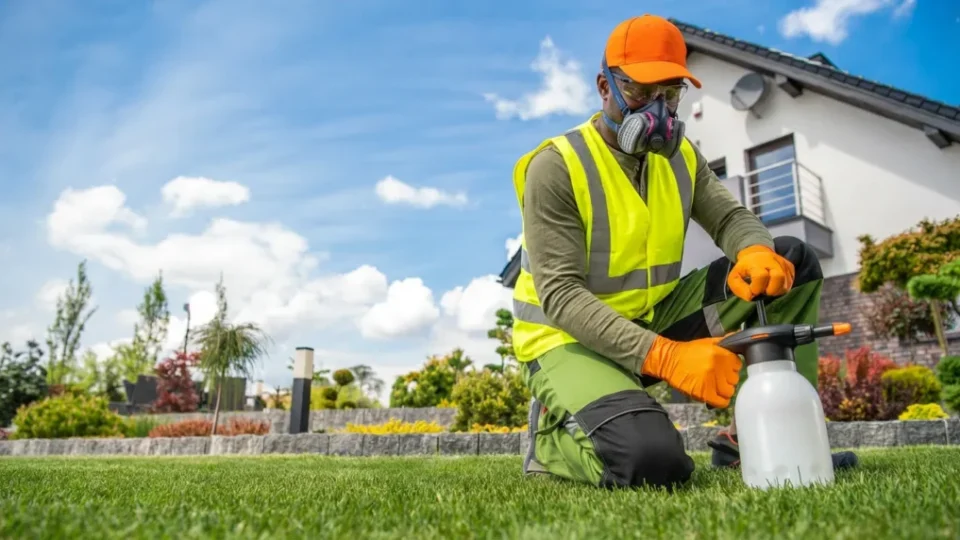
In landscaping, PPE must match the hazard. Landscaping safety helps workers understand when and why specific items are required.
Key PPE includes:
- Eye and face protection against wood chips, soil, and airborne debris
- Gloves for vibration, cuts, or chemical exposure
- High-visibility gear when working near vehicles or equipment
- Protective footwear designed for uneven terrain and heavy materials
Tasks involving rock cutting, chemicals, or airborne contaminants may require respirators. Workers must undergo fit testing, receive medical clearance, and use respirators properly—dust masks are not suitable substitutes when dealing with hazardous vapours or fine particulates.
Long-term respiratory exposure can be more dangerous than immediate skin contact, making correct PPE usage a critical part of training.
Ergonomics and Body Mechanics in Landscaping
Landscaping is physically demanding, lifting stone, pushing wheelbarrows, carrying tools, and operating vibrating equipment take a toll if done incorrectly. Ergonomics training helps workers protect themselves from strain and long-term musculoskeletal injuries.
Our course focuses on three core areas:
Safe Lifting Techniques
Workers learn to:
- Plan the path before lifting
- Lift with legs, not the back
- Keep loads close to the body
- Avoid twisting or sudden turns
- Ask for assistance with heavier items
Vibration Awareness
Tools like chainsaws and trimmers can cause hand-arm vibration syndrome. Workers learn to recognize early symptoms, numbness, tingling, reduced grip and apply controls such as job rotation, anti-vibration gloves, and rest breaks.
Injury Prevention Behaviours
Stretching, warming up, pacing tasks, and selecting ergonomic tools are small but essential habits that prevent chronic injury. Training helps each worker monitor their own physical limits.
Get Immediate Access to This Course

Environmental Hazards in Landscaping
Outdoor work introduces risks that change minute by minute. Landscaping crews must prepare for a wide range of environmental conditions.
Heat
Workers learn to identify heat stress, use hydration strategies, take scheduled breaks, and rotate tasks.
Cold
Cold conditions slow reaction time and impair judgment. Training covers layered clothing, warming procedures, and recognizing frostbite or hypothermia.
Smoke
With wildfire smoke becoming more common, the course outlines when respirators are required and how to use the Air Quality Health Index (AQHI) to monitor conditions.
Weather Awareness
Workers are trained to review weather forecasts, track storm patterns, and apply hazard assessments to avoid sudden dangers.
Recognizing Biological & Chemical Hazards
One essential part of landscaping safety is learning to identify harmful plants, pests, and chemical exposures.
Hazardous Plants
Workers learn to recognize:
- Poison ivy
- Poison oak
- Poison sumac
- Stinging nettle
Training covers first aid steps, decontamination, and how to prevent cross-contamination on clothing and tools.
Pesticides and Herbicides
Aligning with CCOHS guidelines, workers learn to:
- Follow product instructions
- Wear proper PPE
- Inspect sprayers
- Mark treated areas
- Respect re-entry times
- Prevent environmental contamination
The course also covers exposure risks from other biological contaminants commonly found on worksites.
Emergency Response, First Aid & Working Alone
Safety training ensures crews know what to do when a routine task becomes an emergency.
Workers learn how to respond to:
- Cuts and punctures
- Allergic reactions
- Contact with utilities
- Heat or cold-related illnesses
- Chemical or plant exposures
Training includes how to call emergency services, administer initial assistance, and recognize signs of severe reactions such as anaphylaxis.
For workers assigned to isolated tasks, instruction includes check-in procedures, limitations on high-risk activities, and site-specific emergency planning.
Safe Landscaping Starts with Training
Outdoor work always includes uncertainty, but preparation reduces risk dramatically. Landscaping training empowers workers to recognize hazards, adjust to changing conditions, and follow safe work practices consistently.
Training helps workers:
- Choose the safest equipment
- Use PPE correctly
- Reduce strain through ergonomic practices
- Track weather, heat, cold, and smoke
- Identify hazardous plants and chemicals
- Respond confidently to emergencies
CCOHS emphasizes that proactive hazard controls and PPE selection significantly reduce the severity of landscaping incidents and training ensures workers can apply these controls in the real world.
A routine lift, trim, or dig can become a critical event in seconds. Proper training helps crews anticipate risks instead of reacting to them.
If you want your team equipped with the skills, awareness, and confidence to work safely this season, explore the Landscaping Safety course in the BIS online training library. Let us help you build a workforce that ends every shift safely.