

Workplace Propane Safety Tips You Can Trust
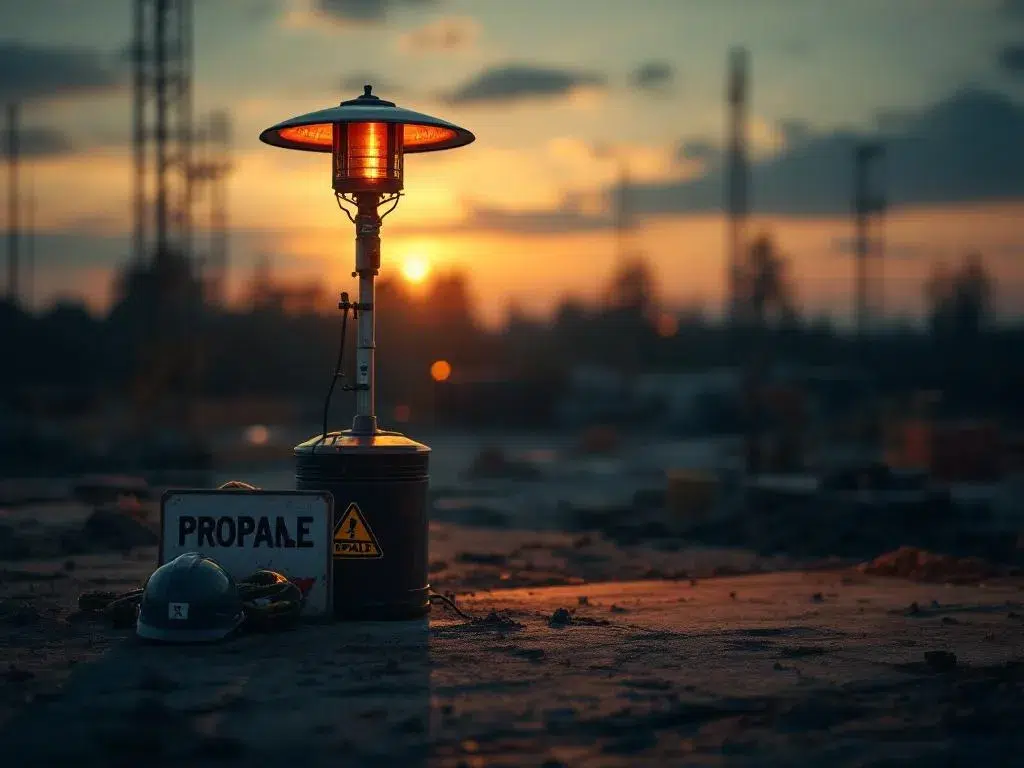
Whether heating job sites, fueling equipment, or cooking the team’s favourite summer lunch, propane is a regular feature in Canadian workplaces. It’s efficient, dependable in cold weather, and cleaner-burning than many fuels. But without proper care, propane can be dangerous, making workplace propane safety tips essential for every crew.
Propane is a compressed, flammable gas. Here’s how to handle it responsibly to prevent avoidable accidents.
Transporting Cylinders the Right Way
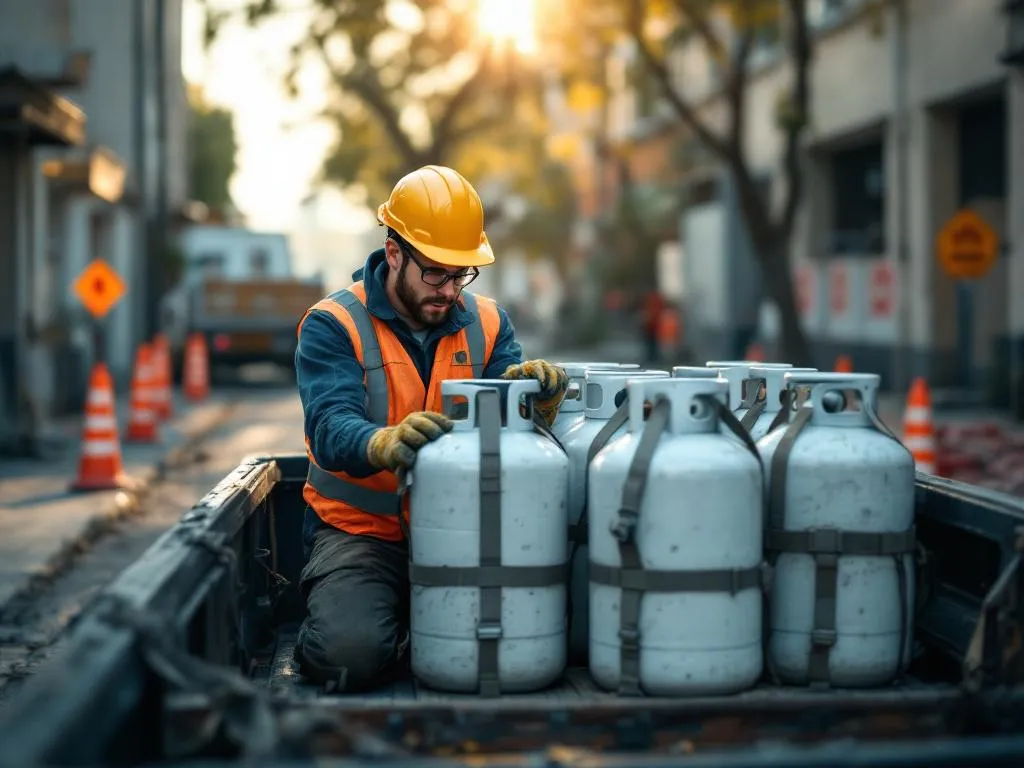
Propane cylinders in transit can be hazardous if not properly secured. These tips are non-negotiable:
- Keep cylinders upright at all times
- Secure tanks so they can’t move.
- Close valves and attach protective caps before transport.
- Prevent rolling, tipping, or collisions inside the vehicle.
Failing to follow these steps can cause explosions, oxygen displacement, or even frostbite. Damage during transport can also create delayed hazards later in use. Meeting TDG and CSA rules is the starting point, safe transport also means route planning, load security, ventilation checks, and complete documentation.
Treat transportation as an active safety task, not downtime.
Best Practices for Storage
Once propane is unloaded, the risk doesn’t disappear. Store all cylinders upright, sealed, and secured. Never stack them, empty or full.
If a leak occurs, propane being heavier than air can collect in low or poorly ventilated spaces, replacing oxygen and posing serious health threats. Outdoor storage is best. If indoor storage is required, make sure ventilation is adequate, exits are accessible, and cylinders are kept away from doorways, walkways, and air intakes. Always confirm compliance with CSA B149 and local fire codes.
Handling Propane Safely
Before hooking up a propane cylinder:
- Check for leaks with soapy water.
- Review requalification date stamps.
- Inspect for rust, dents, or valve damage.
Never skip safety checks because the cylinder “seems fine.” Follow PPE guidelines, manufacturer directions, and workplace safety procedures for every job.
Planning for Emergencies
Propane incidents can escalate quickly. Strong emergency preparedness means having prevention, response, and recovery measures in place.
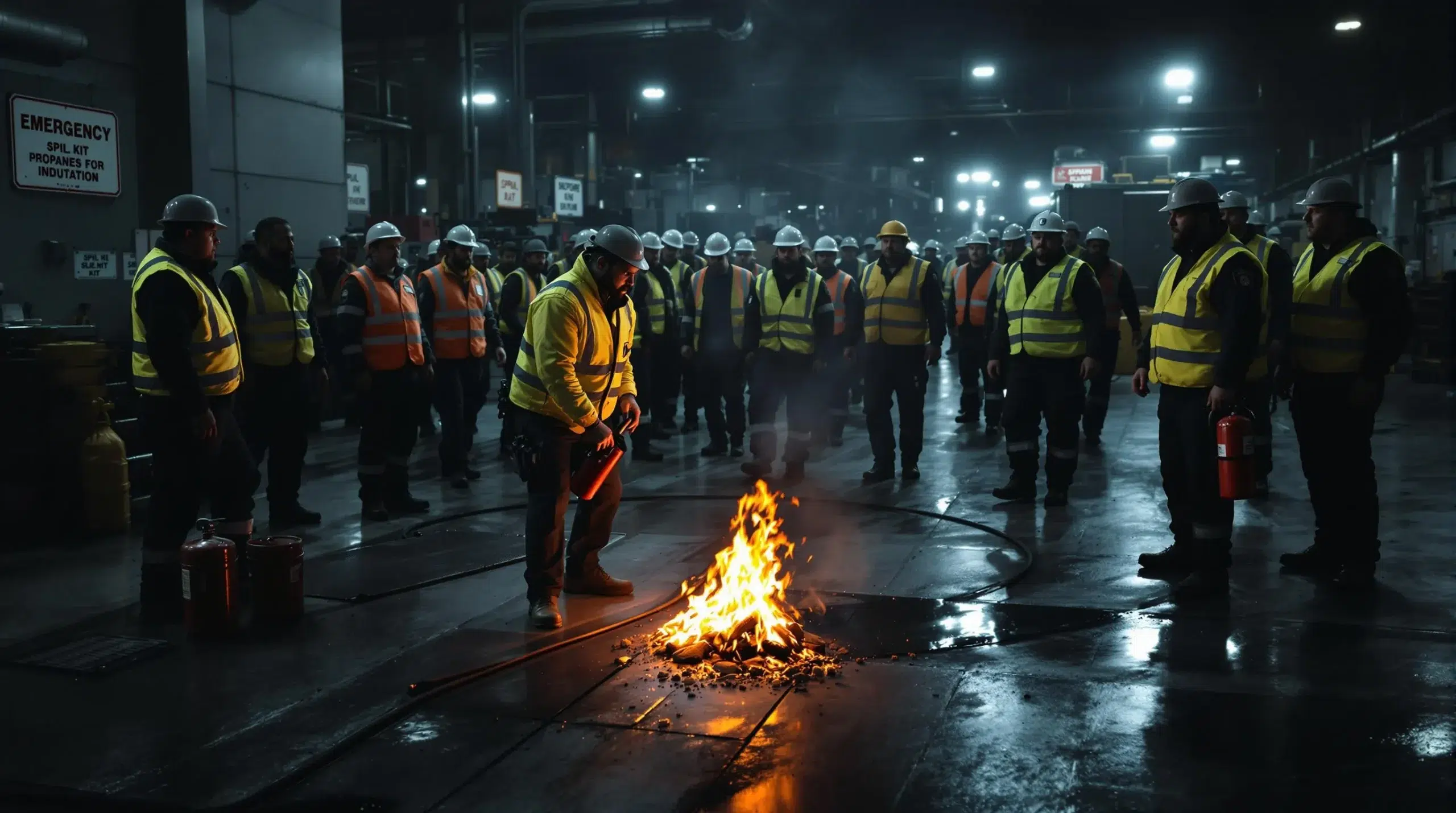
Equip your site with spill kits and fire extinguishers, post evacuation routes, and keep first-aid training up to date. These workplace propane safety tips can make the difference between chaos and control.
Ready to strengthen your workplace propane safety culture? Don’t wait, review procedures, train your team, and handle each cylinder with care.
Train for Better Safety
Want to dive deeper? BIS Safety Software’s Propane Handling course offers diagrams, hazard details, regulation guidance, practice questions, and a final exam. Successful completion of the course earns a certificate.
Ready to expand your understanding? This Propane Handling Course covers safety diagrams, risk factors, regulatory standards, knowledge checks, and a final test. Completion results in an official certificate.