Hazardous Energy Control: Building Safer Worksites with Lockout/Tagout
Every workplace depends on energy, electrical, hydraulic, pneumatic, mechanical, thermal, and more. When that energy isn’t controlled, it can turn routine tasks into life-altering events. Lockout/tagout (LOTO) is how organizations put guardrails around that risk, preventing amputations, burns, electrocution, crushing, and other catastrophic injuries. It’s more than compliance, it’s a commitment to people.
See Energy the Way Systems Do
LOTO begins with understanding how energy moves and hides within equipment. Most machines draw power from more than one source and can also store energy internally. Before any servicing or repair, all sources must be:
- Identified
- Isolated
- Brought to a zero-energy state
Primary energy is usually straightforward, panels, disconnects, fuel, or heat. The tougher hazard is stored or residual energy: compressed air, hydraulic pressure, tensioned or compressed springs, charged capacitors, and even gravity on elevated components. These forces can release suddenly unless they’re bled, blocked, restrained, or discharged.
Coach crews to think like investigators. Every valve, actuator, capacitor, counterweight, and moving part should be assessed for hidden energy that could re-energize the system or create motion.

Clear Roles that Create Accountability
Strong LOTO programs set expectations for everyone on site.
- Authorized workers apply locks and tags, isolate energy, verify zero-energy, and control the restart process. They require task-specific training and must know every potential energy source and control method for the equipment they service.
- Affected workers operate or work near the equipment. They must recognize tags and locks and must not attempt to start, use, or bypass controls under LOTO.
- Other workers in the area still play a role: when they see a tag, they treat it as an absolute stop, not a suggestion.
Employers provide the foundation by supplying hardware, writing and maintaining procedures, auditing performance, and ensuring competence through training and refresher training.
Write Procedures People Can Follow
Each machine needs a written, machine-specific energy control procedure. It should list all energy sources, show isolation points, and sequence de-energization, verification, and restoration. Good procedures help workers anticipate residual energy and choose the right controls.
Traceability matters: every lock and tag must be linked to a person. Assumptions like “everyone knows the drill” lead to failure; “follow the written steps and verify isolation” leads to consistency.
Nine Core Steps that Prevent Injuries
No matter the industry, these fundamentals don’t change:
- Prepare for shutdown: Identify the equipment and all energy sources.
- Notify affected personnel: Communicate scope, timing, and responsibilities.
- Shut down using normal controls: Bring equipment to a complete stop.
- Isolate energy: Open disconnects, close and lock valves, block or disconnect drives.
- Control stored energy: Bleed lines, vent pressure, discharge capacitors, lower/safely support loads, block motion.
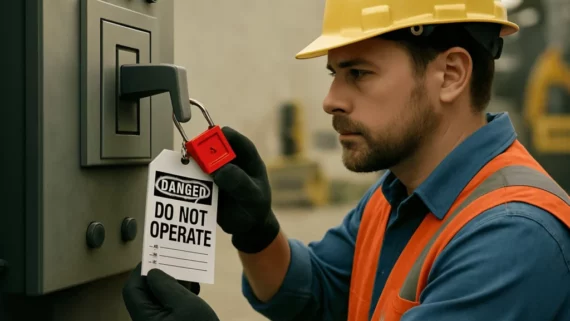
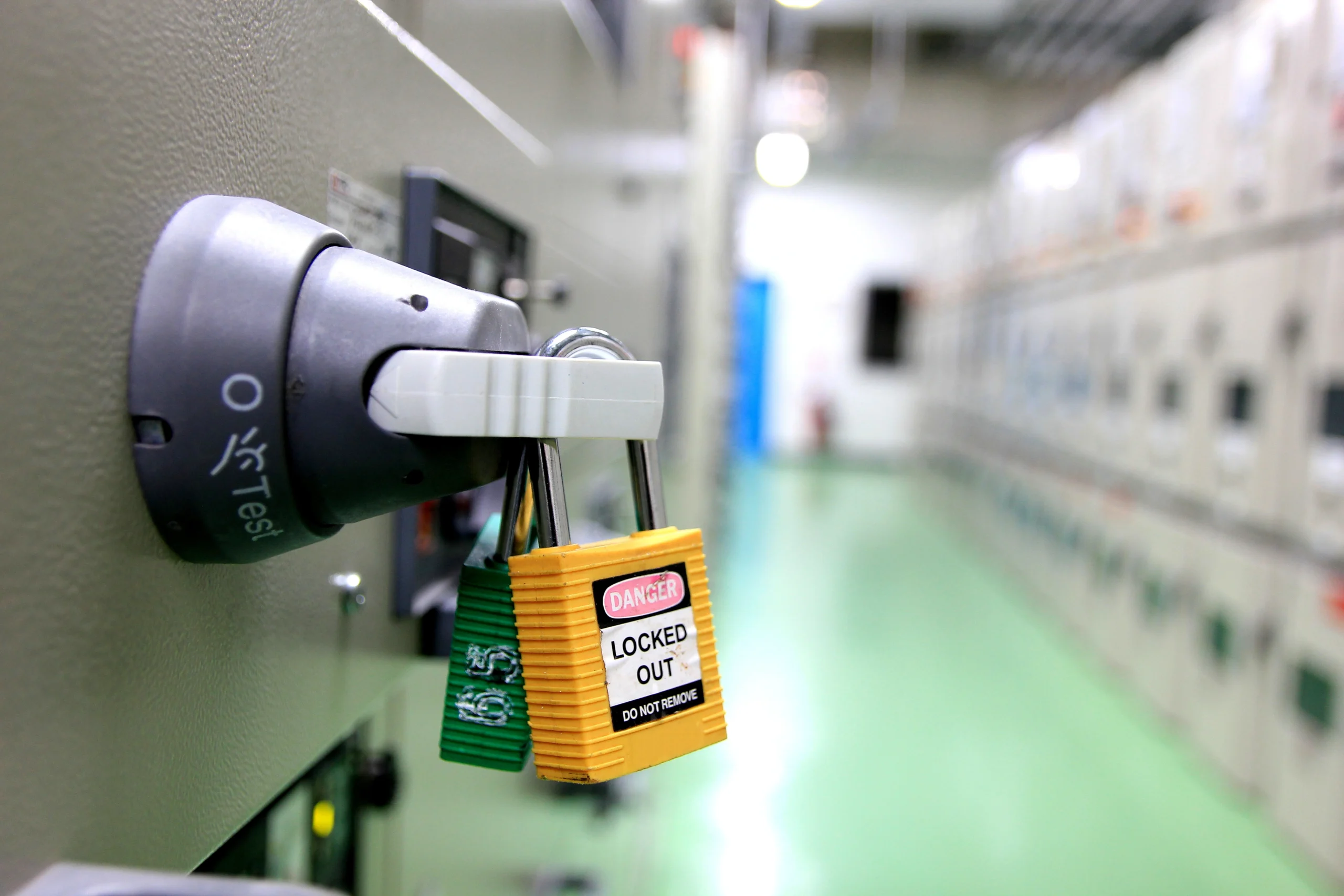
- Apply locks and tags: One lock, one key, one worker, every lock uniquely identifies the owner.
- Verify zero energy: Try the controls to prove the machine cannot start; re-set controls to “off/neutral” after testing.
- Perform the work: Complete maintenance or call a qualified specialist if needed.
- Return to service: Inspect guards, clear tools and people, remove locks/tags in sequence, communicate restart, and restore power.
Each step reinforces the next. The discipline is deliberate, to prevent surprises.
Isolation, Verification, and Group Work
Verification is the step that saves lives: attempt a start with controls after isolation to prove success, then return controls to a safe state. For multi-trade or multi-shift jobs, use group lockout systems or lock boxes so every worker applies and removes their own personal lock. No one is exposed unless their lock has been removed by them, after they’re clear.

The Human Factors Behind LOTO
Procedures are executed by people under real-world pressures. Fatigue, production targets, and familiarity can erode caution. That’s why initial training, practical demonstrations, and periodic retraining are essential. Supervisors should reinforce expectations, coach good habits, and run audits that focus on learning, not blame. Over time, consistency builds confidence, and confidence drives safer decisions.
Lock it. Tag it. Live it.
LOTO isn’t a one-off task, it’s a strategy for managing energy, risk, and responsibility across the life of your equipment. Every lock is a choice to protect life over convenience, and every tag communicates ownership and awareness. If your workplace uses energy and every workplace does, raise the standard:
- Create clear, machine-specific procedures with diagrams and photos where helpful.
- Stock durable locks, tags, hasps, valve covers, and group lock boxes.
- Train and retrain authorized, affected, and other workers, including contractors.
- Verify zero energy every time and document the steps.
- Audit routinely and update procedures when equipment or processes change.
Ready to Strengthen Your LOTO Program?
Our Lockout/Tagout Safety Training equips teams to isolate energy precisely, use hardware correctly, verify zero energy with confidence, and restore systems safely. Build a culture that goes beyond meeting the minimum, make lockout/tagout part of how your workplace works.