Skid Steer (Rubber-tired & Track Loader) – Operator Safety (CAN)
This Skid Steer Operator Safety online course covers the classroom training required by Canadian regulations. The course also includes a checklist that can be used to observe skid steer operators during the practical portion of the training. Although the course is designed for operators, its content is also useful for supervisors, safety managers, and any workers who must interact with a skid steer.
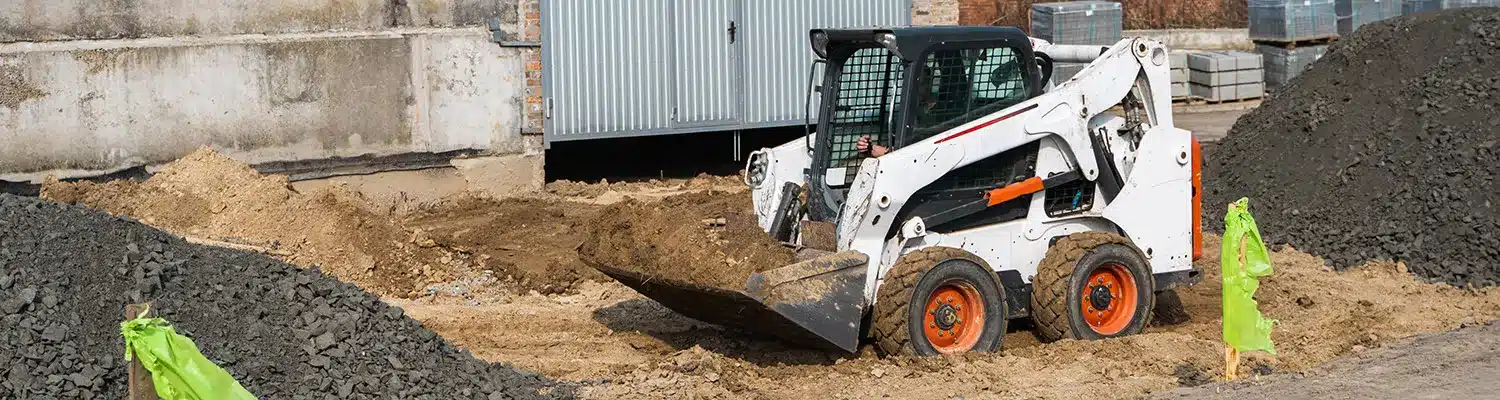
Skid steers are also known as bobcats, and they are classified into rubber-tired loaders, track loaders, and multi-terrain loaders. The wheels or tracks on each side of the skid steer are synchronized but controlled independently from the opposite side. Thanks to this feature, skid steers are very maneuverable, and useful for carrying items around project sites.
However, controlling a skid steer can be challenging, especially in hard-to-reach spaces with limited space to move. A skid steer can also cause severe injuries when not used properly, in spite of its small size compared with other trucks. There are several regulations that cover skid steer usage in Canada, including:
- CSA B335-15 – Safety Standard for Lift Trucks
- Occupational Health and Safety Act (OHSA), Regulation 851, Industrial Establishments
Skid steer operators and their supervisors must also be aware of any provincial or territorial regulations. The vehicles should also be operated according to company policies and manufacturer instructions. There is also guidance from the Canadian Center for Occupational Health and Safety (CCOHS), which should be reviewed and followed.
Operating a Skid Steer Safely
Safety starts even before a skid steer is used. The work area should be assessed properly, identifying hazards and how to avoid them. This includes planning how the skid steer will maneuver close to slopes and stairs. The vehicle must receive a pre-use inspection, and any defects must be reported right away. Also, companies must ensure that skid steer operators and other personnel have adequate PPE.
- When entering or exiting the skid steer, operators should check that lift arm supports are in place, and that the bucket rests at ground level.
- When leaving the vehicle, the operator must make sure it has been shut down completely. While using the skid steer, operators should sit safely while keeping arms and legs inside the cabin. A skid steer should never be operated from the outside, and extra care is required for uneven terrain or when there are workers nearby.
- When providing maintenance for a skid steer, manufacturer instructions should be followed carefully. The bucket should be lowered before any inspection or maintenance task, foot controls should be kept clean, and safety features should be inspected regularly.
Skid steer operators must also understand the difference between rubber tires and steel tracks, and how this affects handling. This online course applies for rubber-tired loaders and multi-terrain track loaders, covering the following topics:
- Pre-use inspection
- Overall features of a skid steer
- Safe operation procedures
- Avoiding hazards
Operators must understand the anatomy of skid steers while being aware of hazards like runover or crushing. In general, operators should follow best practices while using a skid steer, and also during inspections and maintenance. Safety not only rests on the operator, but also on supervisors and employers, and the following are key aspects to consider:
- Skid steer stability principles
- Understanding capacity and load limitations
- Proper refueling and recharging
- Pedestrian awareness and hand signals
Employees working on the ground close to a skid steer should exercise additional caution since the operator does not have 360° visibility. Even a skilled operator can cause an accident if a worker stands in a blind spot.
Sujets de cours
This online course covers the following topics:
- Introduction
- Anatomie
- Stabilité
- Opérations
- Dangers
- Conclusion