Overhead Crane Training – Operator Safety (OSHA) Online Course
This Overhead Crane Operator Safety course online meets the OSHA classroom training requirements. The course covers different types of lifting equipment, such as bridge cranes and gantry cranes. The content includes their operation and inspection requirements and preventing common hazards when they are used.
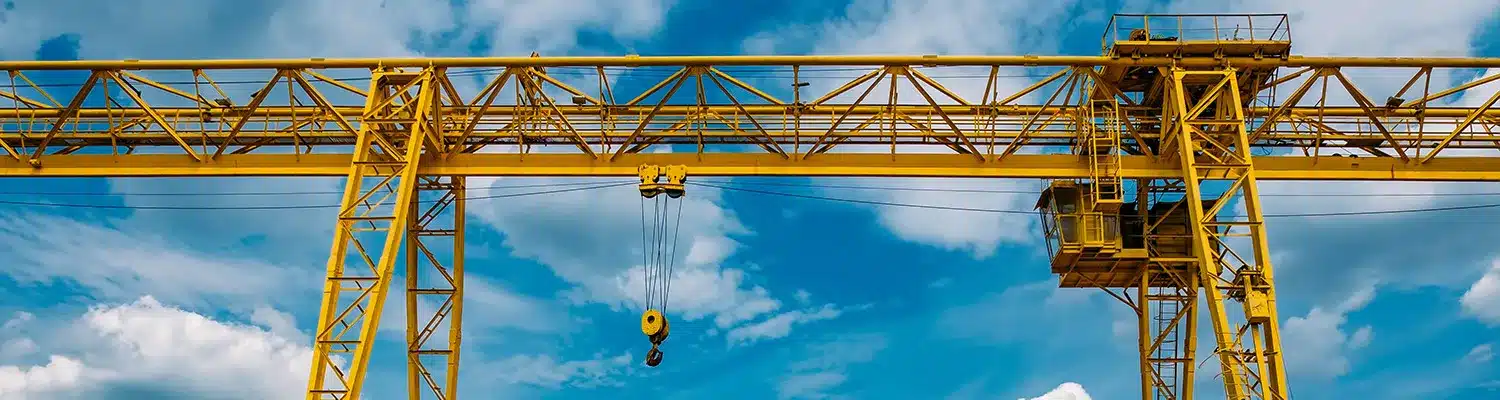
Overhead cranes are very useful when installed and operated correctly, and they simplify many tasks. These cranes are characterized by a railed bridge or support structure, a trolley that travels along the bridge, and a hoist that hangs from the trolley. OSHA requires formal training for all crane operators, but operator certification is only required for equipment with a maximum capacity above 2,000 pounds.
Operator training must cover required knowledge such as crane load charts, and on-the-job training. According to a 10-year OSHA study with 270 injuries and fatalities, 70% of accidents could have been prevented with adequate training. In addition, 75% of accidents happened in operations where OSHA requires specific training for the application.
Operating an Overhead Crane Safely: Main Hazards
In spite of their usefulness, overhead cranes cause many fatal accidents each year, and there are three main types of hazards:
- Electrical hazards
- Overloading
- Falling materials
According to OSHA, 50% of overhead crane accidents are caused by contact with an electrical power source, and 80% of structural failures and crane upsets are caused by overloading.
When an overhead crane touches a high-voltage power source, all persons in contact with the equipment are at high risk of electrocution. Even brief contact can cause many severe injuries or fatalities.
- OSHA establishes minimum safe distances from power sources, and contact is often caused by a lack of planning.
- When operating an overhead crane, all power lines should be considered energized, unless the electrical company confirms they are not.
Operators must be aware that overloading can happen even with loads within the crane capacity. Some events that may exceed the structural capacity include swinging, dropping or dragging a load. Overloading can also be caused by defective components or side-loading of the boom. According to OSHA, one crane upset occurs for every 10,000 hours of operation, and predictable human errors are involved in 80% of cases. The risk of crane overloading can be reduced with adequate training and load measurement systems.
The risk of falling materials is present in any worksite with an overhead crane. Accidents can be caused by visual impairment, mechanical problems, not securing the materials properly, or unskilled operators.
- Hoists and other crane components should receive adequate maintenance.
- The load should be rigged properly, and the slings should be in good condition.
- Lockout/Tagout should be used to prevent unwanted operation when mechanical problems are present.
Even when all hazards are identified and controlled, all employees should wear adequate PPE. Companies can also install warning signs to keep workers aware of the hazards present when an overhead crane is operating.
Overhead Crane Safety Requirements
To operate an overhead crane safely, several conditions must be met:
- The crane should be controlled by a certified operator with proper training.
- Rigging crews should also have proper training, to ensure that loads can be lifted safely. Any load that cannot be rigged properly should not be lifted.
- Overhead cranes must be inspected each day before use, and even minor defects must be reported immediately.
- Operators must be aware that each lift is unique, and should be planned carefully. Tower crane operation is not a routine task.
- Even when there is a plan, the operator must make sure that the lifting path is clear of obstacles and people.
- Controls must be clearly marked, and must match the direction of the crane’s movement.
Like in any business operation, the company must have an emergency plan. Rescuing the operator may be necessary during an emergency.
Sujets de cours
This online course consists of the following topics:
- Overhead crane types
- Hazards associated with overhead crane operation
- Crane inspections and checklists
- Load testing
- Structure and components of an overhead crane
- Emergency shut-off procedure
- Commandes suspendues
- Systèmes électriques
- Étiquettes d'avertissement
- Operating an overhead crane safely
- Rigging hardware and best practices