7 Ways AI Is Transforming Safety Management
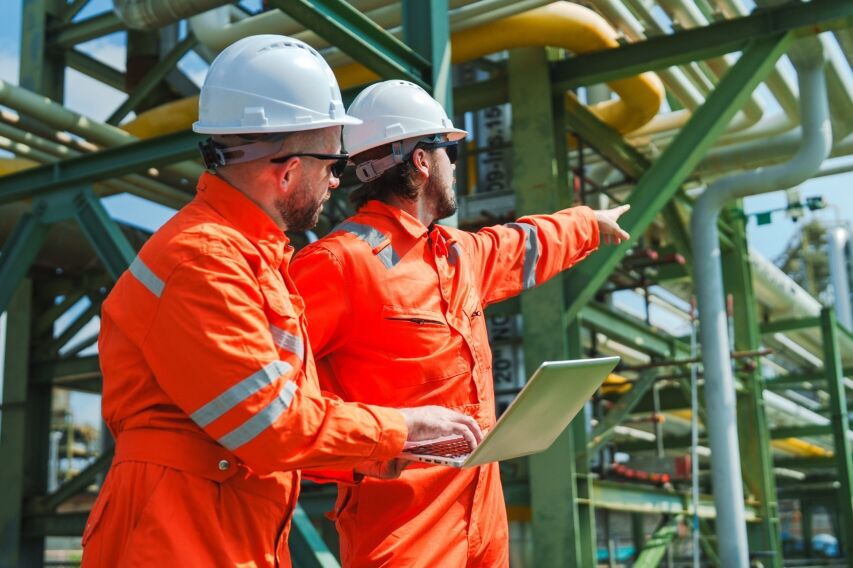
Canadian safety managers look after some of the most demanding work environments anywhere: mine sites in northern Ontario, oil and gas operations across Alberta, construction projects in every major city, and transportation networks that stretch over six time zones. The stakes are high. Year after year, close to 1,000 work-related deaths are recorded in Canada, and hundreds of thousands of lost-time claims are accepted by provincial workers’ compensation boards.
Against that backdrop, artificial intelligence has moved from conference buzzword to practical tool inside everyday EHS software. Providers across the market, including BIS Safety Software and platforms such as Intelex, Cority, VelocityEHS and SafetyCulture, are building AI into the systems Canadian companies already use to manage incidents, training and compliance.
AI is transforming EHS software in Canada by predicting incidents before they happen, automating incident reporting, identifying hazards through computer vision, tracking compliance across all 14 Canadian jurisdictions, personalizing safety training, drafting safety documentation, and connecting wearable devices for real-time worker monitoring.
Here is what each of those changes looks like on the ground, and what they mean for safety managers in high-risk industries.
1. Predictive analytics that flag incidents before they happen
Traditional safety metrics are lagging indicators. They tell you what already went wrong. AI flips that model by analyzing patterns across your incident history, near-miss reports, inspection findings, shift schedules, weather data and equipment records.
In practice, that looks like:
- Identifying that a specific crew, task and time-of-day combination carries an elevated incident risk
- Flagging fatigue-related risk on extended night shifts in trucking and rail operations
- Spotting sites where near-miss reports are climbing before a recordable injury occurs
- Prioritizing which inspections and audits deserve attention first
For a safety manager, this shifts the conversation with leadership from “here is what happened last quarter” to “here is where we are most likely to have a serious incident next quarter, and here is the plan to prevent it.”
2. Automated incident reporting and near-miss capture
Underreporting is one of the oldest problems in Canadian workplace safety. Workers skip near-miss reports because forms are long, clunky or hard to access in the field. AI-enabled EHS software lowers that barrier in several ways:
- Voice-to-text reporting lets a worker describe an event on a phone in under a minute
- Photo capture with automatic tagging documents conditions on the spot
- AI classification sorts reports by type, severity and root cause without manual coding
- Smart prompts ask follow-up questions so reports arrive complete the first time
More reports mean better data, and better data feeds the predictive models described above. It also strengthens your documentation trail when incidents must be reported to provincial regulators.
3. Computer vision for hazard identification
Computer vision, the branch of AI that interprets images and video, is showing up on Canadian job sites in a big way. Connected cameras and mobile apps can now:
- Detect missing personal protective equipment such as hard hats, eyewear and high-visibility clothing
- Alert when workers enter exclusion zones around mobile equipment
- Flag housekeeping hazards such as blocked exits or spills
- Review site photos from inspections and highlight conditions a human reviewer might miss
Used well, this technology acts as a second set of eyes rather than a surveillance tool. Canadian employers should be transparent with workers and unions about what is being monitored and why, and should involve joint health and safety committees early when rolling out camera-based systems.
4. Compliance tracking across all 14 Canadian jurisdiction
Canada does not have one occupational health and safety regime. It has 14: the federal jurisdiction under the Canada Labour Code, plus 10 provinces and 3 territories, each with its own act, regulations and regulator.
AI-powered compliance engines help by:
- Mapping each work site to its correct jurisdiction and applicable regulations
- Monitoring regulatory sources and summarizing changes in plain language
- Linking requirements to specific tasks, roles and training records
- Surfacing gaps before an inspector does
The Canadian Centre for Occupational Health and Safety (CCOHS) remains an essential reference for national guidance, and modern EHS platforms increasingly connect their content libraries to authoritative sources like it.
5. Personalized, adaptive safety training
Generic annual training is giving way to targeted learning. AI inside learning management systems can:
- Recommend refresher training based on a worker’s role, incident involvement and certificate expiry dates
- Adjust course difficulty based on quiz performance
- Deliver short microlearning modules tied to hazards a crew will face that week
- Track WHMIS and other mandatory training currency automatically across the workforce
For high-risk industries where certificates such as fall protection, H2S Alive and confined space entry are non-negotiable, automated training matrices remove one of the biggest administrative burdens safety managers carry.
6. Natural language tools for safety documentation
Large language models are now embedded in EHS platforms to help draft and manage documentation:
- First drafts of job hazard analyses, safe work procedures and toolbox talks
- Plain-language summaries of dense safety data sheets
- Consistent formatting of policies across departments and sites
- Faster translation support for multilingual crews
A note of caution: AI-drafted safety content always needs review by a competent person before it goes into use. These tools accelerate documentation. They do not replace professional judgment, and Canadian due diligence obligations still rest with the employer.
7. Connected wearables and real-time worker monitoring
AI becomes even more powerful when paired with connected devices in the field:
- Gas detectors that stream readings and trigger automatic evacuation alerts
- Lone worker devices that satisfy check-in requirements common in provinces such as British Columbia and Alberta
- Heat stress monitoring for outdoor summer work
- Fall detection that dispatches help even when a worker cannot call for it
For remote operations in forestry, mining and pipeline work, this connectivity can shrink emergency response times from hours to minutes.
What this means for Canadian safety managers
Put together, these seven shifts change the safety manager’s job in three important ways:
- Less data entry, more analysis. Automation handles classification and paperwork so professionals can focus on prevention.
- Stronger business cases. Predictive data makes it easier to justify budget for controls, training and staffing.
- New responsibilities. Safety managers now need to ask hard questions about data privacy, algorithmic bias and worker consent, and to bring joint health and safety committees into technology decisions.
How to evaluate AI-powered EHS software for a Canadian operation
Before signing with any vendor, dig into these points:
- Depth of Canadian regulatory content, not just American OSHA material rebadged for export
- Where your data is stored and how the vendor handles Canadian privacy obligations
- Offline functionality for remote sites with limited connectivity
- Integration with your existing HR, payroll and learning systems
- Explainability: can the vendor show why the AI made a recommendation?
- References from Canadian companies in your industry and your provinces
Final Thoughts
AI will not replace the fundamentals of Canadian safety management: hazard assessment, worker participation, competent supervision and a genuine safety culture. What it will do is give safety managers sharper tools, earlier warnings and more time for the human side of the job. The companies that start building AI capability into their EHS programs now will be the ones setting the benchmark in their industries within a few years.
Ready to see what AI-enabled safety management looks like in practice? Explore how BIS Safety Software supports high-risk industries across Canada.
Frequently Asked Questions
How much does AI EHS software typically cost for Canadian companies?
Pricing is usually subscription based and scales with the number of workers, sites and modules. Small operations might pay a few hundred dollars per month, while enterprise deployments across multiple provinces run into six figures annually. Most vendors offer tiered plans, so ask for pricing in Canadian dollars and confirm what implementation and support cost extra.
How long does it take to implement an AI-powered EHS platform?
A single-site deployment with standard modules can go live in a few weeks. Multi-province rollouts with data migration, integrations and custom workflows typically take three to six months. Vendors that provide Canadian onboarding teams and pre-built provincial content libraries tend to shorten the timeline considerably.
Is AI EHS software suitable for small and mid-sized Canadian businesses?
Yes. Cloud delivery has removed most of the cost barriers that once limited these tools to large enterprises. Many platforms offer starter tiers focused on incident reporting, inspections and training tracking, which are exactly the areas where smaller companies see the fastest payback in time savings.
Who owns the safety data collected by an AI EHS platform?
In most reputable contracts, the customer owns its data and the vendor acts as a service provider. Confirm this in writing before signing, along with data export rights, retention periods after cancellation, and whether your data is used to train the vendor’s AI models. If it is, ask how it is anonymized.
Will AI replace safety managers and advisors in Canada?
No. AI handles pattern recognition, paperwork and monitoring at a scale humans cannot match, but it cannot lead an incident investigation, coach a supervisor, negotiate with a regulator or build trust with a work crew. The role is shifting toward higher-value work, and professionals who learn to use these tools well will be more in demand, not less.